Second Run
“I’m fine,” I told everyone. It was easier than saying anything else.

I was on my hands and knees under the seats in Theater 4, scraping up what I hoped was just gum, when my phone buzzed in my pocket. I ignored it. The movie was still playing—some loud superhero thing that had been out since July, now limping through October at the Starlight. I could hear the bass through the wall, a low animal thud. My knees hurt. I was thirty-two years old. I felt great.
The gum wasn’t gum. I tried not to think about what it actually was. I scraped it up anyway and dropped it into my trash bag, which already smelled like soda and artificial butter and old popcorn and maybe mildew. My back ached in a narrow, specific place between my shoulder blades, and I knew exactly what had caused it: cleaning theaters for eight hours. At my real job I was tired all the time and never knew why.
My phone buzzed again. I sat back on my heels and pulled it out.
Devon: When are you coming home?
The light from the screen made the theater feel darker around me. Onscreen, a man in a cape was crying over something, a planet maybe. I’d seen this movie so many times that I knew exactly when the next explosion would happen.
I typed back, Soon. Love you.
I put the phone on silent and shoved it back into my pocket.
“Casey, you almost done in there?” Jordan’s voice came through the radio clipped to my belt. “We got the next show in ten.”
“Yeah,” I said. “Almost done.”
“Mike wants you on concession in the meantime.”
“Copy that.”
I finished the row and dragged the trash bag toward the exit, the sticky carpet making that sucking sound with every step. My shoes were already ruined. My hands smelled like cleaner and grease. I’d been wearing the same Starlight polo for three days straight. I hadn’t answered my boss’s last two emails. I’d stopped opening Slack entirely.
I felt better than I had in months.
Outside the theater doors, the lobby was bright and a little sad. The claw machine was still blinking, even though nobody ever won anything from it. A group of teenagers was arguing about whether they were late. Ms. Beckles was standing at the counter waiting for her daily popcorn, her purse tucked under her arm the way she always held it.
“Hi, Casey,” she said.
“Hi,” I said, smiling. “The usual?”
“You know it.”
I scooped popcorn into the bag. The machine whirred and hissed. I poured too much butter on it because she liked it that way.
“You look tired,” she said.
“Yeah, but I feel fine.”
She smiled at me like she didn’t believe me, which was fair.
My phone buzzed in my pocket again. I didn’t look at it.
Six weeks earlier, Morgan’s sister had called me while I was in the middle of a Zoom meeting about quarterly brand alignment. I let it go to voicemail because I didn’t recognize the number. When I listened to it later, in the office bathroom, her voice was shaking.
“Casey, it’s Avery. It’s Morgan’s sister. I’m so sorry, but Morgan died this morning. I need you to call me back.”
I stared at myself in the mirror over the sink. I remember noticing that I had a zit on my chin. I thought, I should pop that when I get home. Then I went back to my desk and finished the meeting. I took notes. I nodded. I sent a follow-up email.
I flew out two days later for the funeral. Devon came with me, holding my hand the whole time like I might float away. Everyone told me I was being so strong. I said thank you. I was supposed to go back to work a day later, but I took an extra day off.
“I’m fine,” I told everyone. It was easier than saying anything else.
At the Starlight, the popcorn bag was already greasy through when I handed it to Ms. Beckles.
“Thank you, dear,” she said. “You work so hard.”
“Someone has to,” I said.
Jordan was behind me, counting boxes of Milk Duds. Their hair was faded purple this week, the color of a bruise that was healing.
“You’re going to miss the previews,” Jordan said to Ms. Beckles.
“Oh, I’ve seen them all,” she said. “Nothing surprises me anymore.”
I smiled at her because I knew she was joking, but also not.
When she walked away, Jordan leaned over the counter. “Your phone keeps buzzing.”
“I know.”
“Is it important?”
“Probably.”
“You gonna…answer it?”
“Yeah. Later.”
Jordan shrugged. “Cool. We’re out of Sour Patch Kids.”
“Right on schedule.”
They went into the stockroom and I was alone for a second, the lobby emptying as people went into their theaters. I took my phone out.
Devon: I miss you.
Devon: Are you still there?
I typed, Yeah. Sorry. Just busy.
The three little dots appeared.
Busy with what?
I stared at the words. I could have said work. Family. Grief. All of those were technically true.
I typed, I’ll call you later, okay?
They didn’t answer right away. I put my phone away before they could.
After the funeral, I went to the Starlight because I didn’t know what else to do. I’d driven around town for hours and just kept going in circles, past Morgan’s parents’ house, past the cemetery, past all the places I was supposed to go, until I ended up in the strip mall on the edge of town where the dollar theater had always been. The sign was faded now, a few letters burned out, but it was still there.
I walked inside and it smelled the same as I remembered. Butter and carpet and something old. Mike was behind the counter, a man I didn’t recognize, but he looked like every theater manager I’d ever known. I told him I’d worked there before. He asked if I could start the next day. I said yes.
I told myself it was temporary. I told Devon I was helping Morgan’s family. I was, in a way. At the very least, they knew I was around.
After my shift, I went across the street to McDonald’s. The drive-thru line was too long, so I went inside and got a small fry and Oreo McFlurry. I sat in a booth by myself and dipped the fries into the ice cream. The place was full of teenagers and old people and nobody else.
I scrolled through my texts. Devon’s messages stacked up like something I was supposed to deal with later.
I called her. When she answered, I could hear the TV on in the background, some cooking show she always half-watched while folding laundry.
“Are you eating?” she asked me, out of nowhere.
“I had McDonald’s,” I said.
“You hate McDonald’s. You always say it makes you feel sick.”
“I’m fine.”
“Casey,” she said, and I could hear her moving things around, probably lining up the pill bottles on the counter the way she did when she was nervous, “I don’t really care what you’re eating. I just need to know you’re taking care of yourself. Even a little.”
We talked for a few more minutes, but I thought about Morgan the whole time. Specifically, the last text she’d sent me, which was about a show we both liked. I never replied. My phone still said Delivered.
When I was done eating, I threw my trash away and sat there for a minute, feeling heavy and slow. Then I drove back to the cheap Airbnb I’d been staying in, the one with the broken lamp and moldy bathroom. I lay on the bed in my clothes and watched reality TV until I fell asleep.
Jordan caught me in the break room the next day, sitting at the folding table with my coffee going cold.
“Can I ask you something?” they said.
“Sure.”
“Why are you really here?”
“I work here.”
“Yeah, but like. Why.”
I shrugged. “I needed something to do.”
They stared at me for a few seconds. “You’re here like forty hours a week.”
I picked at the cardboard sleeve on my coffee cup. “Don’t worry about it.”
Jordan sighed. “You know, my mom did something weird when she got divorced. She quit her job at Target because she got passed over for a promotion. Said it helped her in the long run.”
“Did it?”
“Maybe. Eventually she went back and got a raise. My dad wasn’t too happy, though.”
I looked up at them. “What happened?”
“They split.”
“Oh.”
Jordan stood up. “I’m just saying. Sometimes people do weird shit.”
They left. I finished my cold coffee.
Avery texted me that night.
Parents want to know if you can come by this weekend. There’s stuff Morgan left for you.
I typed, I’m working both days.
Can you get one day off?
I’ll try.
I didn’t.
Devon called me on Sunday. I let it ring until it stopped, then texted, Sorry, phone died. I’ll call you later.
I didn’t.
The next week, Ms. Beckles leaned over the counter while I was ringing her up.
“You seem like you’re settling in,” she said.
“I am?”
“Sure, I mean I’ve seen a lot of people come through here,” she said. “Most of them look like they’re just passing through. You look comfortable.”
I didn’t know what to say to that.
“Take care of yourself,” she added gently. “Comfort doesn’t last forever.”
Avery showed up in the lobby one afternoon while I was mopping.
“Casey,” she said.
I froze.
“We’ve been calling you,” she said. “My mom’s worried.”
“I’m sorry,” I said. “I’ve been busy.”
“With what?”
I gestured vaguely. “Work.”
“Work?” she said. “You’re working at a movie theater.”
“Just for now.”
“Casey, my mom asks about you every day.”
I felt something tight in my chest. “I’ll come by this weekend.”
“You said that last weekend.”
“I know. Sorry.”
She looked at me and winced, then nodded. “Fine.”
She left. Which meant I could finally finish mopping.
Devon called that night. I answered.
“Hey,” she said. “Where are you?”
“At work.”
“Doing what?”
“Working.”
“Casey.”
“I don’t know how to explain it,” I said.
“Then try.”
“I just…I don’t know how to go back.”
“Back to what?”
“I don’t know.”
Devon was quiet. “I’m booking a flight,” she said. “We need to talk.”
I didn’t stop her.
She showed up at the Starlight two days later. I saw her sitting in the lobby while I was restocking candy. She looked tired. I felt sick.
“Hi,” I said.
“Hi. Why didn’t you tell me you were working here?”
“I needed something to do. I didn’t think it mattered.”
“Are you for real? It matters to me.”
“I can tell.”
She waited for me to say more. I didn’t.
“I can’t keep waiting around,” Devon said.
“I’m sorry.”
“I know you are. But that’s not enough.”
I didn’t say anything else. She left.
That night, I finally went to Morgan’s parents’ house. Avery let me in. The place smelled exactly like it did a decade ago, and I hadn’t smelled anything like it since. Morgan’s room was still the same, too.
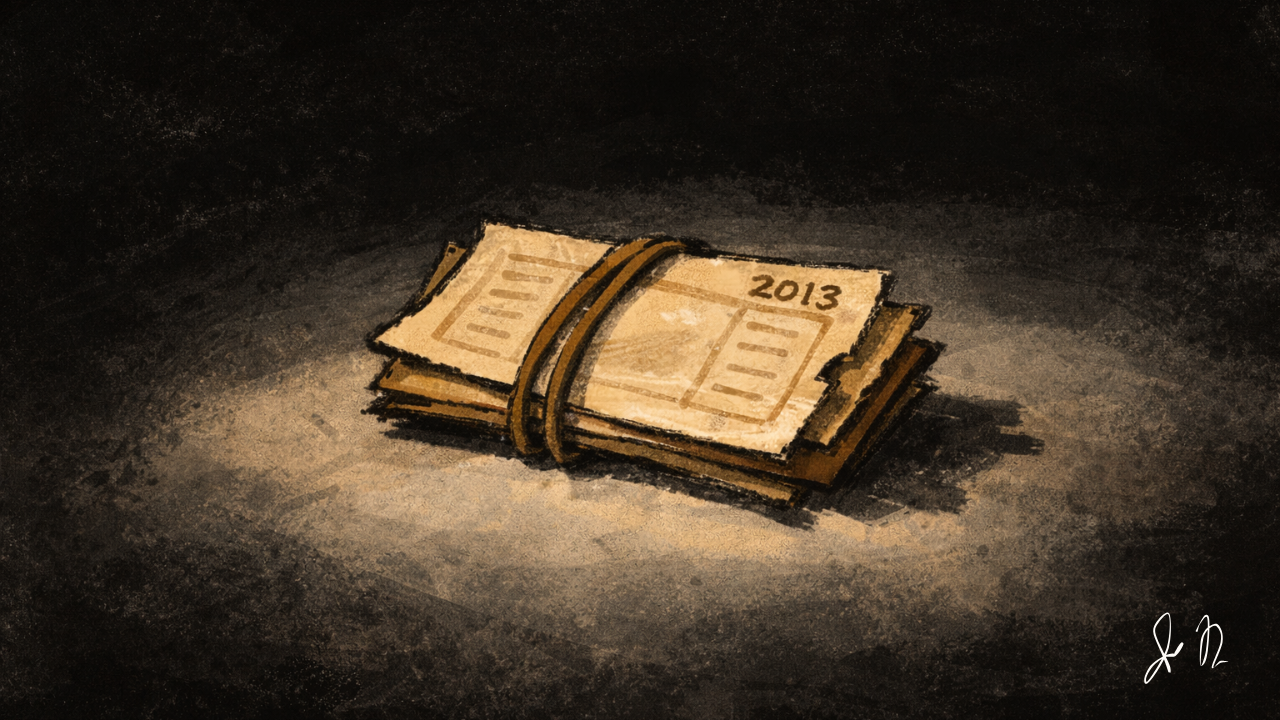
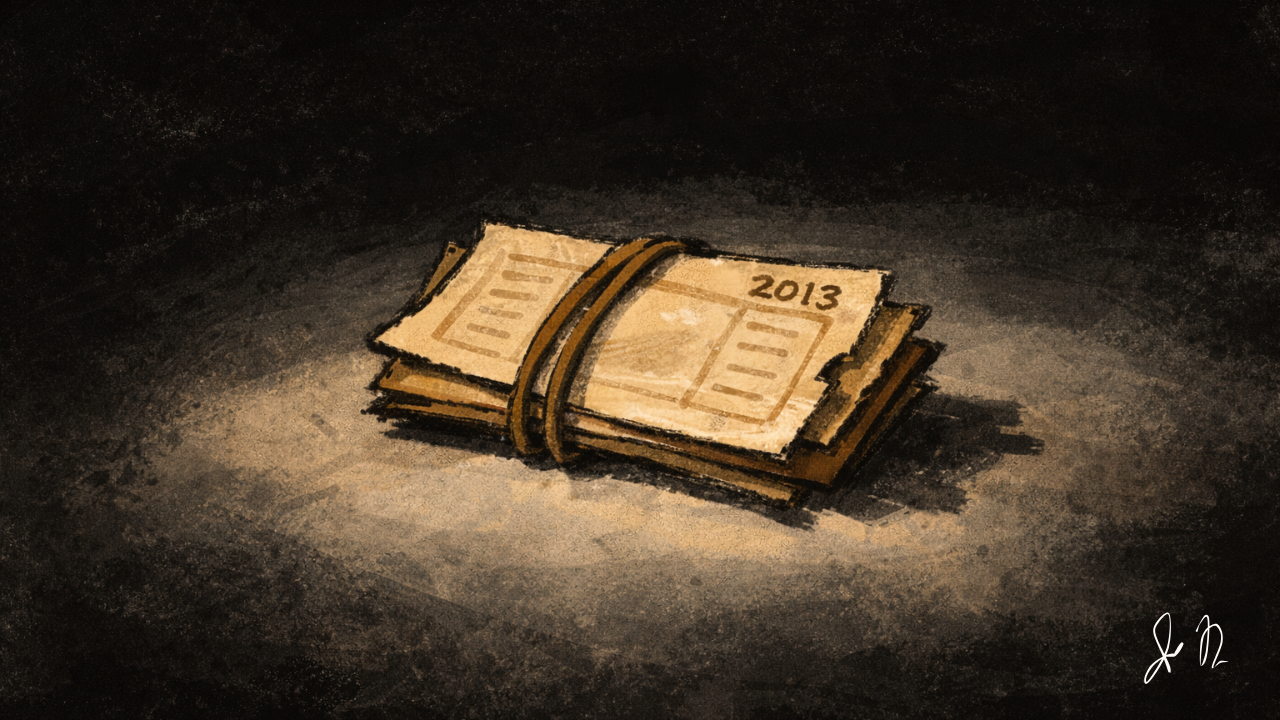
I sat on the floor and cried into my hands, loud and ugly, the way I only could if no one was around to hear it. In the bottom drawer of Morgan’s desk, I found a stack of ticket stubs from the Starlight, rubber-banded together, soft at the edges from being handled too much. I held them like they might dissolve in my hands.
Monsters University. The Grand Budapest Hotel. Inside Llewyn Davis. Edge of Tomorrow. All from 2013 and 2014, all from late shows, the ones we used to sneak into after closing. I could see us again in the back row, our feet up on the seats, Morgan whispering jokes about the dialogue and me trying not to laugh too loud, both of us pretending that if we stayed in the dark long enough, nothing else would be waiting for us when the lights came back on.
“We should do this every week, like forever,” she’d said.
“I’m not going to jail,” I said. “They’ll catch us eventually.”
“Fine,” she said. “We’ll just work here. Watch the movies for free.”
“Right, and I’m guessing we’d sneak food in so we don’t waste money on concessions.”
“Exactly.”
I laughed. “But if you quit after one week, I’m not sticking around so you can leech off my perks.”
She held up a pinky. “Deal. All or nothing.”
A few days later, I stood outside the Starlight, my freshly-washed uniform folded under my arm. Jordan came out for a cigarette.
“Hey, you working today?” they asked.
“I don’t know,” I said.
“Yeah, well, that’s not how schedules work.”
“Right.”
Jordan went back inside. I stood there, looking at the building. I wondered how much longer it would be around.
Author's Notes
I have this recurring dream where I move back to my hometown and start working at the local dollar theater, which was my first job (from 2007-2011, to be clear). It's a weird dream since, well, for starters that theater doesn't exist anymore. It shut down years ago. The other weird thing is that I have no interest in ever moving back to my hometown or working at a place like that again. So why dream about it?
That was the central question behind me writing the story. Sort of me investigating what it would take to make me go there, and the story honestly got away from me after a while. The original version of this was almost 4,000 words, and it absolutely did not need to be.
I structured this one a bit differently compared to my other work, particularly in the literary space. The back-and-forth timeline thing is quite common for other writers, particularly the strategy of using flashbacks in the second scene to contextualize the first one. This isn't my usual style for short stories, as I worry they can be a little confusing depending on how they're handled. Plus, who has time for backstories?! I want to keep this thing short!
Regardless, I'm happy with how this particular story turned out. The metaphor is probably painfully obvious, where we have this dollar theater literally showing "second runs" of movies past their prime, mirroring Casey's second run of youth in her 30s. But that's why I wanted to make sure there's still this element of her teenage connection with Morgan, and how that complicates the metaphor by having her attempting to recreate something that's already gone.
That's actually why I start the story with the detail that Casey is cleaning up messes under seats, showing how she's literally dealing with other people's residue while trying to avoid her own emotional debris.
If I haven't said it enough by now, having a minor in psychology has helped my writing tremendously. In this case, I was able to use what I know about avoidance as a framing for how people deal with grief. Often, grief is a sort of productive numbness. Casey doesn't collapse in this story until the very end. She's working 40 hours a week and is polite to customers (yes, Ms. Beckles is based on a real person), and texts Devon "love you" and remembers to call her, albeit not on time.
But we can see that it's all sort of a facade. This is why we eventually get to these abrupt segment breaks ending with "I didn't." It's a rhythm of abdication that pushes Casey (and the story) to a breaking point.
I chose movies from 2013 and 2014 because that was around the time I left my hometown to live across the country and it felt more fitting than picking movies from, say, 2010 or 2011 when I was working in a theater. 2014 marks the moment of me becoming a totally new person. And in this story, we indeed see Casey is mourning Morgan. But she's also morning the person she was with Morgan. Before the corporate job and the inexplicable tiredness. The theater represents a time when she and Morgan were pretending to be in the dark and it's just not working. Because the lights already came on a long time ago, and there's no real way to go back.
To me, one of the hardest parts about loss isn't just that someone died, but that you have to keep being yourself without them. And I hope this story captures some of that feeling in its own way.

Jon Negroni is a Puerto Rican author based in the San Francisco Bay Area. He’s published two books, as well as short stories for IHRAM Press, The Fairy Tale Magazine, and more.
Support Cetera
Paid members get exclusive perks like bonus stories, the ability to comment, and more. Plus you'd be helping us keep the bills paid. You can check out the subscription tiers below, or you can leave a one-time tip if that works better for you.