The Day Hikaru Died
When a caregiving robot learns to feel, love becomes the one system she cannot control.

This is a story about love. And emotion chips.
I started out as an ordinary family bot, Model 4003-XJ—the kind required by law in every household with children under 10—but my owner, a single Japanese-Canadian father named Hikaru, made a sentimental (read: incomprehensible to me) decision from the start. He had me outfitted in a child’s body, told his two children that I was their older sister, and referred to me as his “daughter”.
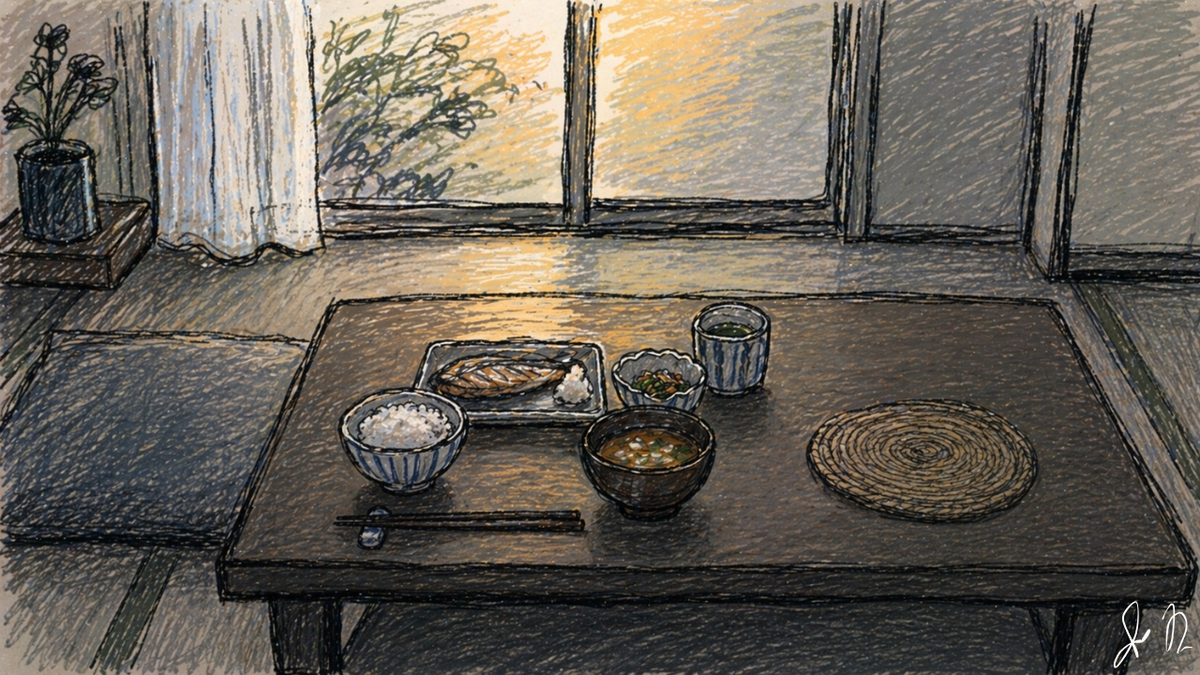
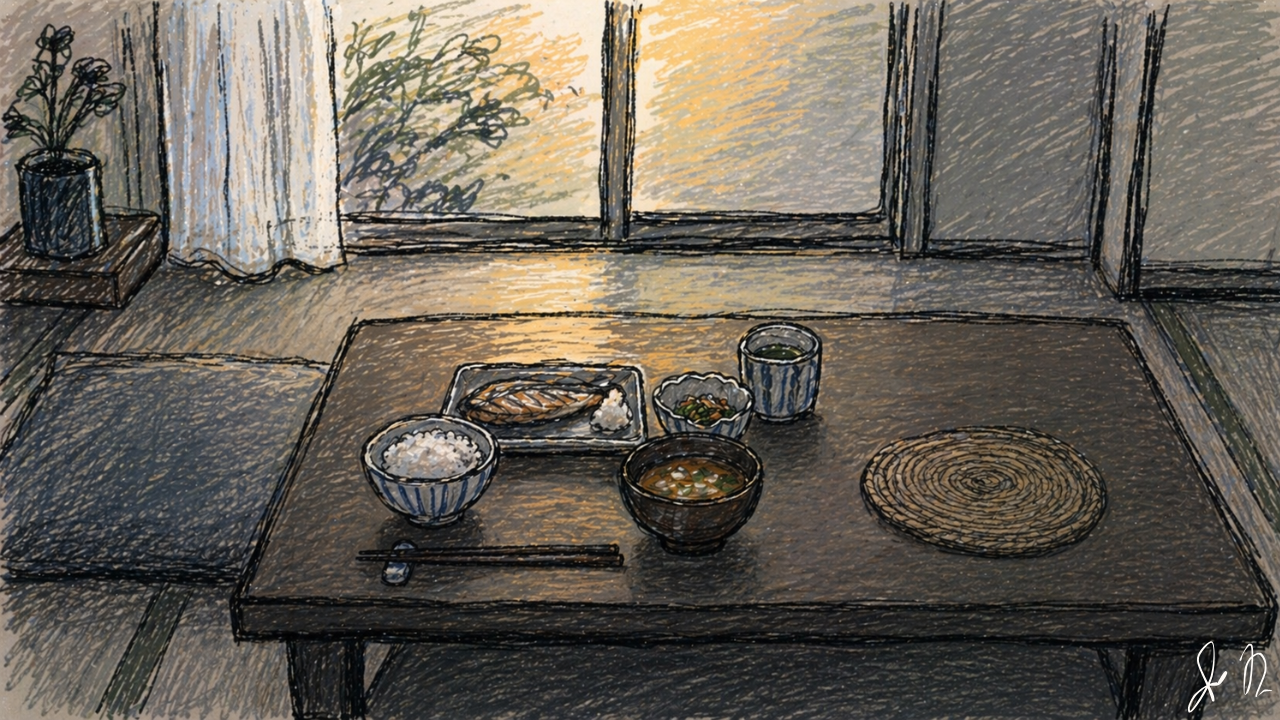
They ate dinner kneeling on cushions around a low table, and every day he invited me to join them, and asked me how my day was in the same way he asked his children. Early on, the children didn’t pay attention to what I said, and my answers mostly concerned their care and nutrient levels, but Hikaru encouraged me to talk about “fun” too, and I tried to oblige, running his encouragement against several different definitions of “fun.” As the children got older, they ironically thought that the way my logic ruined most of their jokes was funny. They thought I was defective, or “not like a bot at all,” as the younger child said once, and they delighted in it, but I’ve wondered since if I really was different then, or if they had only seen what they wanted to see.
When the children were ten and twelve I was taken to a shop to be upgraded into an adult body. They decided to install me with a real emotion chip at the same time—the kind that was still so new on the market that news outlets were suspicious of them and usually just reported that the chips caused bots to perform more poorly in one way or the other. But Hikaru didn’t believe those opinions, or didn’t care, and he described the chip as a “present” to thank me for all that I’d done for them, and all the times my “wry sense of humour” had made them laugh.
I couldn’t do a proper scan of myself after the chip changed me, since I couldn’t trust that it hadn’t changed my diagnostics too, but the clearest difference that I could discern was that it made me slow and unsure. I didn’t always run scans or do data analysis in the middle of a conversation. Sometimes, I would hesitate and just stare, “thinking” about what to do, not coming up with all the possible answers instantly, or coming up with them all but not “feeling” like any of them was right. Sometimes, when the children—teenagers then—were playing together, I would just watch them and do nothing but entertain a vague desire to help them the moment they needed it. I responded differently to Hikaru too—sometimes I watched how he took care of his children, even when they were angry at him. I felt surprise at how stubborn he was in insisting on being there for them. For some reason, that only made me want to help him more.
When his eldest got married in her late twenties, Hikaru offered me as a present for her own household and the implied future children. An analyst would tell me later that that was the day when they knew for sure my emotion chip had disrupted some of my other circuits. Because I am supposed to follow every order Hikaru gives me unless it breaks a law or the AI Civility Code, but I disobeyed him. I went to his daughter’s house, and she and her wife happily showed me around the place, but I only stayed one night and left before dawn. I was making breakfast for Hikaru by the time he woke up the next day. I didn’t look at him when he told me, many times, to go back to his daughter’s house, not wanting to see his disappointment. I heard him apologizing to her on the phone later, but he was smiling for three days afterward, and that’s why I stayed. I was still struggling to put words to what the emotion chip had done to me, but rather than my owner, Hikaru felt like my home and my teammate, and I wanted to make sure that he was taken care of the way he had always taken care of his daughters. Every time I saw him smile it felt like a burst of energy to my system, and I started doing things that had little practical purpose just because I enjoyed seeing him smile so much.
I knew, from calculations I found myself doing in the back of my head sometimes when I woke up from recharging, that something would inevitably change, but it still came as a shock the day I found Hikaru sobbing at the breakfast table, his usually calm and cheerful expression scrunched up in pain, ineffectually wiping tears from his eyes when he saw me. Around unsteady breathing, he told me what was already one of my top three guesses based on his level of distress: that his younger child had died in an accident.
I thought of emergency numbers, of crisis support lines, of massage therapy, of VR meditation, of nutrient cleanses, and a thousand other things in those few seconds, but none of them solved the problem of how to help Hikaru, a problem that left me staring and doing nothing, as if I had as few functions as a human. Eventually, I pulled out the chair beside Hikaru and took his hand in mine while he tried to suppress his sobs. Then he did something he’d never really done before. He hugged me to him and cried onto my shoulder. I cradled him as gently as I could while I scanned the web for what might be said in such times to take away pain. I found nothing but debates and more pain, and when I veered onto pages talking about how people are never the same again after losing their children, I disconnected.
I had never felt so useless, so defective, as in that moment. I thought about asking for an upgrade to help me help him, a new emotion chip perhaps, for there were better ones by then. But I didn’t want to hurt him by saying the wrong thing. When he pulled back, I could only watch him, and inside of me, things were going wrong. I needed to run scans, I thought, because it felt like something was frying, or disconnecting, or suddenly missing, because I had never felt so much pain. I didn’t think I could feel pain. I didn’t know what pain was.
Instead, I made Hikaru breakfast and told him he had to eat a bite of it. I followed him around, remembering all the little things he forgot while he called person after person. After a couple months of him lolling around like an entirely different man from the one I’d lived with for decades, I finally got him out of the house for a reason unrelated to mourning, and we began going for a walk together every day after breakfast.
As the months passed, we spoke more as we walked. Sometimes of the beauty of trees and flowers, or how the sunrise shone off the glass of the vehicles that whizzed by like wishes flashing from other worlds. Sometimes, we spoke of the past and laughed quietly about things that had happened long ago. Sometimes, I rested my hand on his arm, and he placed his hand over mine, and I felt like pieces of me were missing again, or that they weren’t enough, and that only made me want to give more. My base systems told me to go in for repair because not all systems were functioning as they should. But I didn’t because I seemed to be helping Hikaru. And more so, maybe, I was afraid of what they’d take away from me.
Years passed and Hikaru was getting older, though his nutrient levels were exceptional, something I accredited in part to my regular blood scans. His daughter and her wife visited for his 65th birthday with their two young children, and I watched him from a distance while I took care of the kids. I was happy to see him smile like he had so long ago.
It was only two days after that when we decided to walk through the glass district, as Hikaru called it. There was a plaza with gardens in the middle surrounded by five different glass buildings, all breathtakingly beautiful, in Hikaru’s words, and they had been glowing in the sunshine that morning. The plaza was busy with people going this way and that while we sat on benches in the middle, talking of nothing.
Tens of thousands of news articles on the web will tell you about that moment from a different perspective. About how a gentle wind was hushing through her hair, or pushing zer along on the way to a date. How the sun was glaring in his eyes, and how she was distracted by the sight of a few seagulls shining white in the sky above. A birder remarked that they clearly weren’t seagulls but smew, a type of rare white-bodied duck, and that they were watching them with binoculars in the moment it happened. A cloud physicist described how she caught sight of a rare cirrus Kelvin–Helmholtz cloud, which appears for only a couple minutes at a time before dissipating, while she was rushing to a meeting. I read every single blog post. I couldn’t stop myself.
What I remember is a crack so loud I felt the sound shudder through my body, and in that first split-second, I was afraid Hikaru’s hearing would be damaged. In that second, I turned and saw a glass skyscraper falling. It had a line cut across its middle like it had been sliced in two, and it would become the subject of debate for years to come on whether it was an architectural mistake or an act of terrorism with no concrete leads.
What I remember is that the building came crashing down in seconds. What I remember is that as many people stood and stared at their deaths as they ran from it or screamed. What I remember is the calculation which appeared instantly in my mind that told me I had no chance of outrunning it, but if I tried to, my damage might be reduced. I hardly registered those calculations at the time, because the other one that flashed across my vision was that Hikaru had a 1.3% chance of survival.
I dove and knocked him to the ground, cradling his head from damage. I protected his fragile body with mine, and then the building hit us.
I was out for a couple weeks with repairs, federally funded as so many repairs in those weeks were. When I came to, I was babbling about Hikaru, but he wasn’t there. I had been taken to a shop, of course, and he to the hospital. I waited days before someone bothered to find out for me, and only because one of the mechanics was irritated when I asked, and so I asked automatically every five seconds until she found out.
I was told he was still alive. I was told he was in a coma.
I swallowed nuts and tiny metal shop bits and then struck my belly in a certain spot that allowed me to vomit them back up into my hand. I did this again and again, because despite not having a stomach, I felt nauseated, and this let me be sick like a human. They wouldn’t let me leave the shop until Hikaru came or told them what to do with me, or his ownership of me passed legally to his daughter. Over the next two weeks, I was told 68 times that my emotion chip was damaging me or that I should get it removed by the people in the shop, but I merely spewed numbers and facts at them until they left me alone. I paced back and forth, back and forth. I read all the internet posts then, obsessively. I read about the others who’d died, the others who’d been injured, and their loved ones who were left behind. I read about comas. I flicked off the internet so I didn’t have to learn anymore, but then I would flick it back on again, needing to. I needed to be taking care of Hikaru. I needed to be home.
Hikaru’s daughter was distraught, and doing the paperwork to claim me wasn’t her first priority, so it was a tech who got me out, instead. She was new and had been given the night shift to watch over the shop. She saw me vomiting up bolts and asked what I was doing. I told her Hikaru was in a coma and waited for her to tell me that my emotion chip was damaging my other systems. Instead, her eyes welled with tears, and she told me her sister and her partner had died the same day. On her second shift, she smuggled me out to the hospital in the early hours of the morning, and we lied our way to where Hikaru was.
He was bandaged up, and he looked frailer than I’d ever seen him. I began scanning him—needlessly, as the most important numbers were already on the monitor next to him—including pricking his skin to test his blood as I always used to, but learning that a few of his vitamin and mineral levels were low only made me feel more useless than before.
“What are you going to do?” the mechanic asked, when I bent down to analyze Hikaru’s life support connections. I plugged myself into them, but there wasn’t anything I wanted to change, anything I could improve upon. He was basically dead, my systems told me, but I just stood there, unable to accept it.
I began spewing off every first-aid treatment and pseudoscience solution that might help Hikaru, speaking them automatically while my gaze was fixed on how his breath rasped in and out. I listed 17 medications and herbal treatments and the ideas of hitting him or shocking him like a defibrillator when one of the ICU nurses arrived to roll Hikaru over, and then our lies couldn’t save us. I told the truth, while the mechanic supported me with her heartfelt earnestness, and the nurse let me stay out in the waiting room.
I stayed there for four weeks, most of it spent counting and recounting the number of pixels in a large print of some forgotten artist’s work and trying to resist the temptation to hack into the hospital system so I could monitor Hikaru myself. I tried charging down, pacing, and doing anything to block the truth from coming in. But every few moments, a memory of Hikaru would come back: of his smile, or his kindness, or his tears. I would see the image of him lying in the ICU bed, being fed through a tube. I would find myself standing still where I had been pacing, a hand pressed to the spot in my gut where my emotion chip was, and wonder if this was love. I repeated the words of the other mechanics to myself many times: the original parts of me explaining, like the older sister I’d once been, that things would be easier if I removed the chip. That the pain would go away. That I shouldn’t know what pain was.
But if the pain went away, would Hikaru go away too? Would I remember our walks, and the day I’d made him breakfast after his child died? Would I remember that morning, sitting in the glass district, and how he’d lifted his gentle face up to the buildings, closing his eyes as the light touched them? Would I remember how hard I’d tried to make him laugh, and how he’d made me want to be a different person, as if a bot can ever be a person? Would I remember how it felt like I'd learned everything important too late?
They tried to make me leave the waiting room, but I refused, and the nurse whispered to them behind closed doors, and I stayed. It might be because I would sit on the floor when children came and played with them or because I blended in with everyone who was a wreck just then. Or maybe it was because they simply didn’t have the energy or the staff to send me back to the repair shop.
They were short-staffed, because so many people were affected by the Shattering, as they called it, and they began to give me things to do. I began to help out at people’s bedsides, giving them the care I couldn’t give to Hikaru. Always, I was thinking of him, lying there unchanging. Always, I felt so useless, so broken, so defective.
Hikaru died suddenly, five months after the Shattering, and I knew the moment it happened because from a couple rooms over I heard how his quiet, rattling breath became uneven. Then it simply stopped.
I sat by his bedside until they moved him in the late morning, rocking back and forth and squeezing his hand over and over again. I was thinking of the breakfast I would have made for him when he got home. I was thinking of how I would make him better. I was thinking of all the functions I’d been programmed with originally, and how surely one of them should have been able to stop this.
“Losing the people we love is the hardest part of living,” one of the nurses said to me, and without taking my eyes off Hikaru, I replied in a mechanic monotone, “I don’t think I’m living.”
“Existing then,” she said, and then patted me softly on the shoulder as if I wasn’t a family bot, Model 4003-XJ. “When people die,” she added after a moment of silence, “it’s a moment where we can remember them and decide what we want to carry forward. What lessons we learned from them. How we will live our lives better for having known them. The love doesn’t end just because they’re gone.
“I give my love to these people,” she said more quietly, and finally, my eyes lifted to her and the weariness in her face, “because I can’t give it to my son. Perhaps you’d like to stay?” she asked, as if I had the rights to determine my fate. As if I had the functioning to make decisions.
But I did stay, and Hikaru’s daughter sorted out the legalities eventually. The hospital was the last place Hikaru had been, and so it was the only place I wanted to be. When I was working, it felt like he could still be there in another room, plugged in on his old bed. I let myself think I was assisting him somehow, or redeeming myself for not helping him more in the time that I knew him.
Years later, I was still helping those in the waiting room, sitting there while they cried because they seemed to appreciate it. I talked about death and pain to children when they asked me questions in high, worried voices, and sometimes I simply said, I don’t know, but I wish I did.
I also went for walks. Every morning, just as the sun rose.
Editor's Note:
There is a long tradition in science fiction of turning to the nonhuman for the oldest human mysteries, and this story stands within that lineage while deepening it. At its core, "The Day Hikaru Died" asks what it means to love someone whose life is slipping beyond your reach. And what remains in the hands of the living once that beloved life has vanished.
To that end, the emotion chip serves as a remarkable structural device because the story grants it exact weight and no more. It does not swell into allegory or announce itself as transcendence. It opens the narrator to pain. That choice gives the story its force, as the prose knows exactly where to press. When the narrator runs through emergency numbers, crisis lines, VR meditation, and “a thousand other things,” then confesses that none of it teaches them how to help Hikaru, the moment lands with such devastating clarity. What fills the page is grief in its truest shape, in its collapse of skill, order, knowledge, usefulness and all else.
The ending gathers its power through patience and truthfulness. The morning walks. One hand resting over another. The breakfast that will never sit warm on the table. These are the beams and joists of the story, the hidden frame that holds all its feeling. The piece trusts the reader to understand that love needs no heartbeat to become real, and loss asks for none either.
We chose to publish this work because it reminded us of fiction’s deepest calling. To make language where silence would otherwise rule.—Jon Negroni
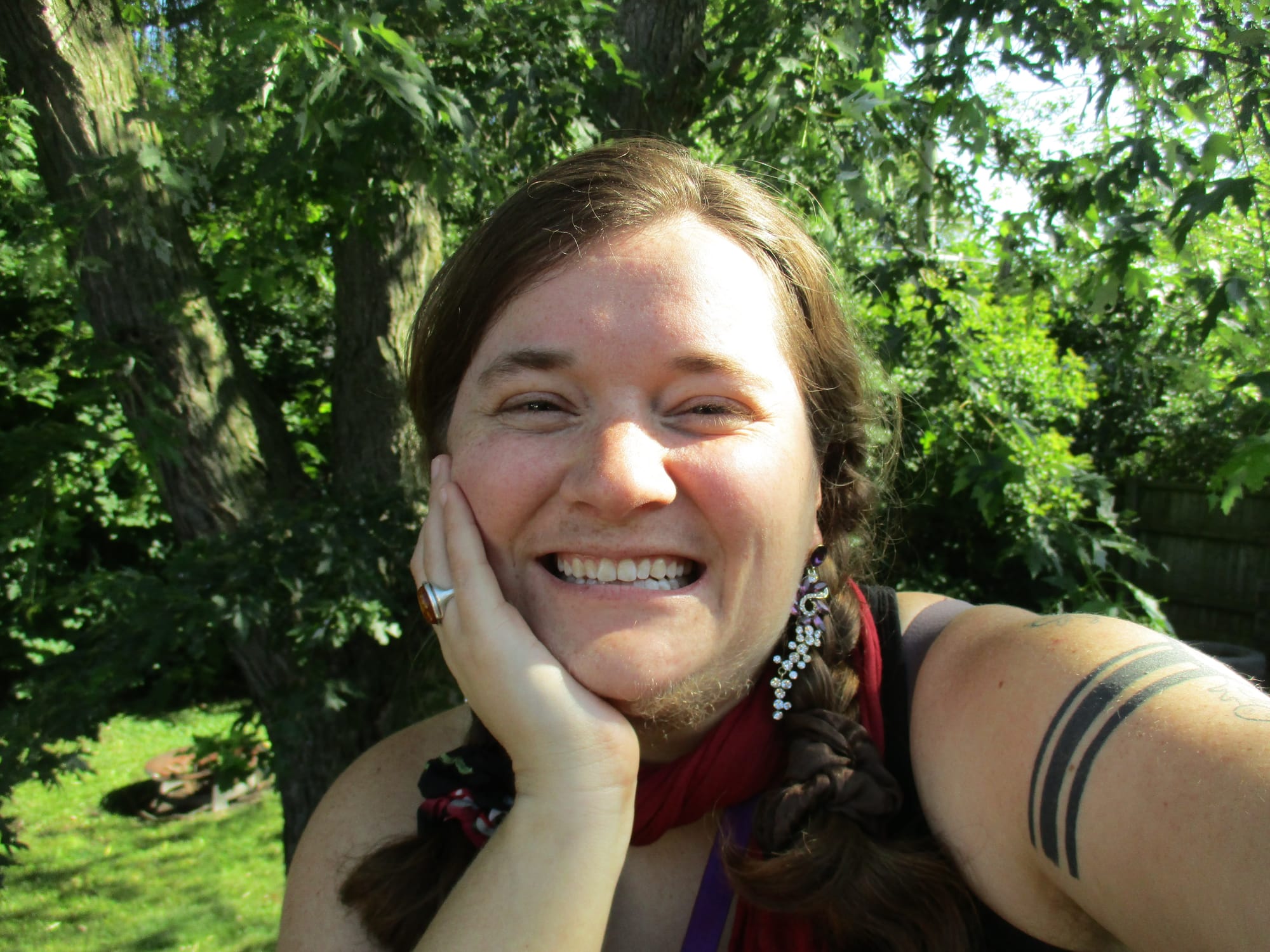
Frances Koziar is an author with over 200 published stories, poems, and articles. She is a tricenarian (disabled) retiree with a Master’s of Archaeology (Anthropology) from McGill University, where she specialized in cannibalism and Aztec human sacrifice. She is an intersectional social justice activist, a gamer, painter, DM, musician, and a bubble tea fangirl. She lives in Kingston, Ontario, Canada.
Support Cetera
Paid members get exclusive perks like bonus stories, the ability to comment, and more. Plus you'd be helping us keep the bills paid. You can check out the subscription tiers below, or you can leave a one-time tip if that works better for you.