Notch: The Lost Years
She spent thirty years learning to trust the part of herself she couldn’t explain to anyone.

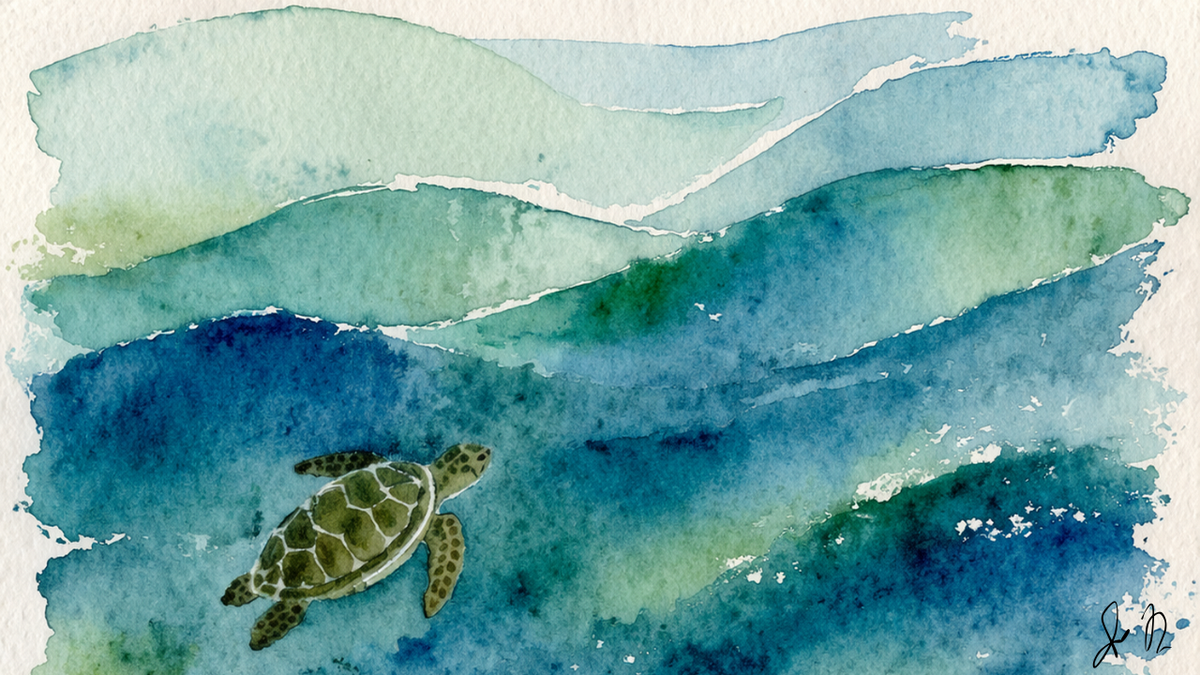
Mary Oliver said to let the soft animal of my body love what it loves, but my animal was not soft: She was carapace and scute, phalange and scale, kelp-scented. You know how Gregor woke up—pow!—discovered he was a cockroach? It didn’t happen that way for me: No big reveal, no sudden terror or awkward coming into myself as two beings. I have no memory of a time before knowing her name or the feel of her smooth oval head patterned like brown field tiles, but I don’t know how we began.
The morning of my first date, high school homecoming, my mother took me bra shopping for a complicated jobby that lifted my barely visible chee chees and concealed my nips but left the pale skin of my back exposed. It was a near-impossible mission in the tiny rural town where I grew up, but we’d left the task to the last minute so there was no chance of city shopping.
In her relief at finding the right tool for the dress at one of the two small department stores crowded with egged pantyhose and flannel pajama sets, my mother, who did not ever speak of such things, turned the music low in the Pontiac on the ride home. She rolled the window an inch to release cigarette smoke into the wind and told me a story.
I was a year old, she said, my toddler face covered in an angry teething rash. She set me to soak in a warm oat milk bath, put my favorite ‘45, “Everybody Wash,” on the record player, and lowered herself beside me on the toilet seat as the room sweated with the steam of bathwater. Soon enough, she said, I was rubbing myself gleefully “down there.”
“You had no shame whatsoever, Alicia!” she said and smacked the steering wheel with her cigaretted hand, her cheeks blushing the pink of my homecoming dress. “‘Naughty,’” she said. “You chanted the word over and over: ‘Naughty. Naughty. Naughty.’ It was your first word!”
My mother plucked me out of the tub, apparently, whisked a diaper over my baby parts, and dashed me into the hushed, white, and antiseptic office of our family doctor who told her that Notchie (not “Naughty,” I couldn’t tell my mother) would likely shrivel and fall off over time.
We could also opt for a fairly painless outpatient surgery, though my parents would have to pay out-of-pocket and in advance. Mother opted to wait. She was nothing if not frugal.
“It is gone?” she asked tentatively as we turned toward home that homecoming morning, and the tires flung the driveway’s gravel in all directions.
I pretended to laugh. “I have no memory of that,” I said, shaking my head, which my mother understood to mean Yes, Notchie’s gone, and we said no more about it. Was this my first lie? Certainly there had been lies before—certainly there were lies after.
In college, my roommate mentioned that a guy she was seeing never managed to find—or did not know to seek—the little man in her boat, and that’s when I knew for certain I was different. Did others have a canoe inside themselves? Were their seas navigated by a tiny man in a woolly cap while my sea was navigated by a turtle named Notch? If given the choice, I would always trust the turtle, but that didn’t matter. I wasn’t given the choice.
Notchie’s always called me girlfriend, even during the years I pretended not to like girls in that way and worried the word would give me away. Not that anyone could hear. Girlfriend, while I galloped my rocking horse through imagined meadows. Girlfriend, when Shaun Cassidy appeared on TV. Girlfriend, when my friend Crystal asked to play house-for-reals. Girlfriend, she’d moan while I straddled tree limbs during after-dark games of hide-and-seek. Girlfriend, that homecoming night when my date, Bobby, pressed my bare back against the metal door of his Ford pickup. Girlfriend, while inside the cab I spread my legs across the bench seat, and my head banged against the door handle. Girlfriend, girlfriend, girlfriend.
Though I have no memory of the bathtub incident, the feeling that I’d done something wrong—that I was in trouble—stalked me. I never mentioned Notchie again to anyone, not even my husband. I was so nervous about a lover discovering Notchie that I made it a practice to drink myself at least tipsy before sex, and I never, ever let anyone put their head between my thighs.
If I suspected someone glimpsed Notchie—lover or friend—I ghosted. Until I met Mel.
I was working at Downtown Café while attending graduate school. I’d been divorced almost two years and hadn’t been on a single date—no interest and no time. Notchie wasn’t happy, but I ignored her whispers and focused on my studies. Mel was co-owner of the clothing shop across the street, Hearsay: Fine & Vintage Goods. I knew this because Mel’s business partner—a chatty white guy everyone called Burger, who drank his coffee black, no sugar—told me.
“I don’t know how they can drink that shit,” he said every time he picked up Mel’s cinnamon oat milk latte. “Tastes like ass.”
“Trying to frighten away our customers again, Burger?” I’d respond, and he’d laugh and drop a dollar in the tip jar on his way out.
And then one day Mel picked up their own latte. I noticed them while they waited in line. They had light brown skin, soft brown eyes, and wavy black hair pulled into a low ponytail. Notchie noticed, too.
A customer started shouting at me across the bar. “This pastry is inedible!” she cried, shoving her plate of half-eaten scone at me. “It’s supposed to be blueberry. It tastes like onion. If I wanted onion, I’da ordered onion.” She didn’t want another scone, and she didn’t have time to wait.
“Is this what they call slow food?” she scoffed as I placed a wrinkled five dollar bill in her turned up palm. “Twenty-minute wait, tastes like crap?” She turned to Mel. “How long’ve you been waiting?”
Mel looked up from their phone. “I don’t mind waiting,” they said, smiling brightly as the woman rolled her eyes and stomped out. “I like the vibe here,” Mel called to the woman’s back. “I like it better when no one’s shouting at the staff,” they said quietly to me as they approached the register.
“Thanks for that,” I said, grinning.
“Don’t let the bastards grind you down, eh?” they said.
“Never,” I said, shaking my head, wondering about their age.
Definitely younger than me, I thought. Much younger. Too young? Notchie said no.
“Shush,” I said, aloud.
“Pardon?” Mel said.
“Oh, uh,” I stammered, feeling the heat crawl up my neck. “I was talking to myself—um, what can I get you?”
When they ordered the cinnamon oat milk latte I guessed who they were.
“I’m a critter of many habits,” they said, smiling again. “Usually, Burger offers to buy the coffee while I do the bank deposit because he hates math, but he’s out today, so it’s all on me.”
They tilted their head and squinted a little. “You should come by after your shift. We just got in a blue tunic that would look amazing on you.”
“I, uh, didn’t think you’d carry my size,” I said with a—oh, God. Was it a nervous titter?
“Pfft,” they said, pushing backward through the door.
“You’ll be closed by then,” I said with a small question in my voice.
“For you,” they said. “I’d stay open late,” and the door jingled as they dashed across the street. I watched them unlocking their shop.
“If you’re finished with your meet-cute, can I get an onion bagel?” the guy at the front of the line said with a kind smile.
Mel was right about the tunic. It was cerulean with a drapey boatneck, three-quarter sleeves, and a very reasonable price tag. I bought it on the spot. To be honest, I would have bought the thing if I’d looked like a toad in it and had to eat rice for a month to recoup the expense. After I paid, we chatted while they closed up shop.
“Have you always wanted to own a retail store?” I called across the clothing racks.
“No,” they laughed dryly and tossed a feather duster at me. “I was a social worker right out of grad school, but I burned out after five years, just lost my compass.”
“I’ve heard that’s tough,” I said, taking their hint and dusting shelves filled with vintage tin canisters and gently clinking mint-green depression glass roosters.
“There were bright moments, but I don’t have enough of a buffer for so much sadness and so few resources,” they said while re-folding graphic t-shirts on a display table.
“So you made a change?”
“I changed cubicles and stayed another six years,” they said with a snort.
“Oh,” I said, doing the math of their age in my head. “That’s a long burn out.”
They grabbed the vacuum from the closet and plugged it in. “I was on the cusp of a breakdown, I think,” they called over the hum of the machine. “I had a couple of beers at my brother’s house one night and got a little—uh—emotional about everything. Burger was there. He’d been bartending for years and said it had lost its charm.”
“And that’s when Hearsay was conceived?”
“That’s the short version,” they said, stuffing the vacuum back into the closet. “Thanks for dusting.”
I handed them the feather duster. We stood close together. I was sure I felt something sparking between us.
“Hey, so, I like you,” I blurted, hoping the low lighting hid my sudden pink. “Would you want to go out sometime?”
“Hey, so, I like you, too,” they said, grabbing their jacket from the closet hook. “But. I don’t really do relationships—the romantic sort, I mean.”
“Oh, yeah,” I said, turning away, and quickly scooping my backpack and shopping bag from behind the register. I was bright red now. I could feel it. “No problem. I’ll see you at the coffee shop, or, you know, wherever.”
“Alicia, wait,” Mel called as I backed toward the door. “The alarm!—” And then it wailed.
“Sorry, sorry!” I shouted. “I’m an idiot.”
I let the door shut behind me. I ducked my head and hustled away from the blare of the alarm, toward the underpass, toward home.
Notch was silent. Or Notch was silent until I drank a half bottle of cheap Malbec and climbed under the covers. Girlfriend, Girlfriend, Girlfriend, she thrummed.
A few days later, Mel stopped into the café during the lunch rush and stood at the bar. I tried not to make eye contact as I rang up orders and handed them behind me.
“Do you want to see The Urchins with me tonight?” they called over the Brazilian jazz vibrating the café’s tiny speakers. “My brother canceled.”
I looked up, pointed at my chest, and mouthed, “Me?”
Mel nodded.
“Rob? Roy? Rett? Anyone who can read my handwriting?” I called as I slid a cappuccino toward the wall of customers. “Tonight?” I asked Mel as I turned back to the toaster to smear a waiting sesame bagel.
“Yes,” they said. “I really don’t want to go alone.”
“As friends?” I asked with my back to them. I could see my coworkers side-eyeing our conversation.
“Friends,” Mel shouted.
That’s how our friendship began.
Mel didn’t lie. They didn’t do romantic relationships—not with me, not with anyone. For a long time, it was fine. After The Urchins, Mel invited me to a showing of The Thin Man at an independent theater across town, and we shared a pint of contraband rocky road. I would have gone just to hear Mel’s laugh, boisterous, as if there were no one else in the room.
Soon, we were spending Friday evenings hanging out on my apartment patio listening to French jazz while Mel smoked cloves, and I tried not to look too long at their lips. We swapped notes, books, and tales of retail tragedies. We painted posters and chanted at protests. We took an early train to the country to buy a slice of the world’s largest doughnut—glazed, greasy, disappointing—but all the while, we shared stories about our parents, our siblings, our first loves.
I never mentioned Notch, though I could feel her presence like an itch, like an ache.
A year later, Mel and I stood waist-deep in the Pacific. I’d finished grad school, and my parents saved enough to gift me a trip to the beach. I invited Mel, of course. We were practically living together by then.
The sky was blue on blue; the water was just cool enough to be a fresh welcome. The air smelled of sunscreen, and down the shoreline, seagulls chased each other and screeched in circles around someone’s abandoned, tattered fast food bags. Mel watched the horizon.
“When I was a kid,” I said, “we had a pomegranate tree in our back yard. It was mostly neglected, but every summer it would grow small green fruit, round with pointy star stems—each one like a fat, alien octopus.”
“A fat, alien octopus?” Mel asked, quirking an eyebrow.
“It’s my fruit story.”
“OK. Alien octopus. Go on.” They had leaned backwards quickly to dunk their hair, and the dark curls dripped water down their back.
“Every day I’d check how they were ripening. Yellow, then pink, then rosier pink, roundness flattening on each side. Every day, I wanted to pluck one, but I wanted it to be the most ripe, the sweetest, and every year I waited too long. I’d wake up one morning, and the deer would have eaten the entire bush, leaves and all. I’d cry all the way to school.”
“I thought you said it was a tree?” Mel asked.
“It was a bushy tree,” I said. “That’s not the point.”
Mel snorted, and then we were silent for a minute, splashing. I could feel Notchie, restless. I was thankful for the cloak of the sea.
“May I ask a question?” Mel asked.
“Another question?” I laughed. “Yes.”
Notch was behaving oddly. I could feel her in my belly, in my chest. My back ached, and I wanted to hold my breath.
“Am I the pomegranate in this parable of produce?”
“Do you ever feel like you’re so different that no one could possibly understand?” I asked, feeling the waves pull my legs from under me. “Like, no one would ever believe the truth of you?”
“Yes. Every day.” Mel sighed. “Alicia, I can’t be what you want.”
“What do I want?” I was paddling my arms now as I sank lower and sea water sloshed in my face, while easing the pain in my back.
In answer, Mel shook their head.
“We could be something,” I said, and then I was under the waves.
It was a relief, really, like a long stretch after hunkering down. My body, carapace and scute, phalange and scale, soft leather, but not a stranger. My body was most mine. I blinked several times, and through the shadowy sway, something lingered—a fish, dark and strong-jawed. I almost didn’t have time to wonder before the fish—a remora!—darted in and pressed its body to my turtle belly, held fast. Oh, delight. Oh, how I swam at last.
Editor’s Notes:
This story operates by a logic the reader doesn’t understand until they’re already inside it. The story announces its metaphysical premise—a woman who has always known herself as partly turtle, partly human, whose clitoris has its own name and personality and history—with about the same flatness you’d use to describe a story about two people taliking over dinner. This is the move. By the time you realize you’re reading magical realism, you’ve accepted it as yet another quirky biography.
What the author understands, and what many writers get wrong, is that the body in fiction almost always becomes allegory. The body stands for something. The queer body. The marginalized body. The body that society has tried to surgically correct out of existence. And yes, Notchie’s near-excision by a family doctor is not incidental, it’s a real gut punch because these bodies usually get conscripted into argument. This story cuts that. Notchie is decisively not a symbol for queerness. Notchie is queerness, the same way Notchie is pleasure, selfhood, the part of you that whispers girlfriend whether you’re ready to hear it or not.
The structure is what truly earns the ending. We move from childhood shame to suppression to a friendship that is and isn’t enough, and the reader feels the pent-up pressure of a self that has been managed rather than lived. When the narrator finally goes under the wave, the release is physical before it’s emotional before it’s metaphorical and that’s exactly the “right” order.
And what a great voice this story wields with such effortless confidence. It’s funny in the way people are funny when they’ve processed enormous pain, which is to say it’s efficient without performance. A kind of wild precision.
We published this because it reminded us what fiction can explain a life by moving as one. It can be startling, inevitable, strange, and in the end, entirely yours.—Jon Negroni

Patricia Caspers is the founding EIC of West Trestle Review. She is the author of three full-length poetry collections, most recently The Most Kissed Woman in the World. She earned an MFA in Creative Writing from Mills College (RIP), and her award-winning work has appeared widely in journals such as Ploughshares, Pithead Chapel, and Cimarron. She is a Unitarian Universalist.
Support Cetera
Paid members get exclusive perks like bonus stories, the ability to comment, and more. Plus you'd be helping us keep the bills paid. You can check out the subscription tiers below, or you can leave a one-time tip if that works better for you.