Bleach
A woman is sure her quiet roommate isn't human. She's almost right.

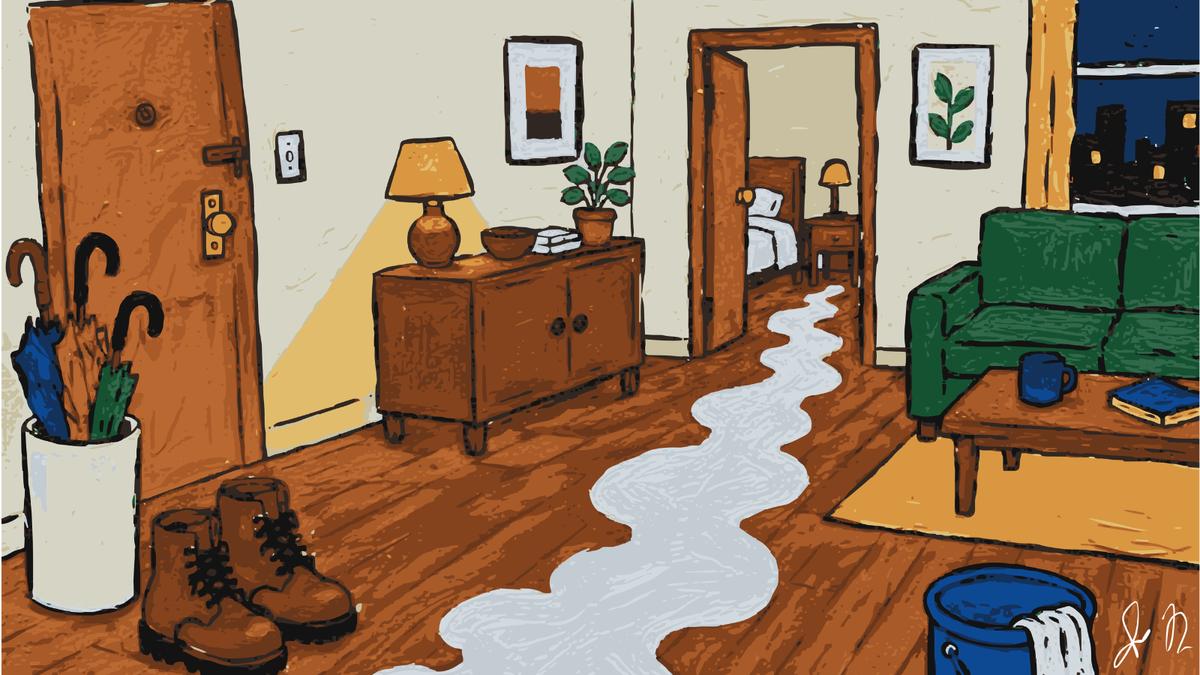
The name of my roommate is Ana. She’s twenty-six, working as a cleaner at a restaurant chain. She wakes up early in the morning, drinks black coffee, puts on the same pair of brown boots, and leaves the house to return late at night. Ana has a collection of umbrellas, and she doesn’t talk much. I wish I knew more, but I don’t. I would occasionally have a beer in the kitchen and ask her how her family was doing, but she would only shrug.
Everything around her smells of bleach.
Ana celebrates her birthday three months into our coexistence, and I give her a bottle of perfume as a gift. She doesn’t take the hint.
The walls, the floors exude bleach. My throat is tingling.
One night I wake up to the sound of long nails tapping on the floorboards. Ana’s in the living room, in the light of a single yellow lamp, kneeling on the floor with a rag in her hand. I’m forced to hold my breath.
“Ana.”
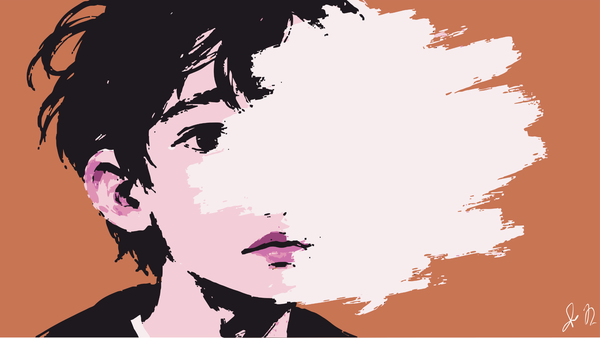
I turn on the big light. It takes her a few moments to turn her face to me, to look me in the eye. I squint to see something: a shade of drunkenness, intoxication, or sorrow she suppresses by cleaning. There’s nothing. Eyes, hair, skin.
“I woke you up,” she whispers. “Sorry.”
“What are you doing?”
“I couldn’t fall asleep. I thought I’d clean.”
“You can’t clean wood with bleach. You’re destroying the floors.”
“Oh. I didn’t know.”
“How could you not know? You’re a cleaner.”
“There’s no wood in the restaurant’s kitchen. I’ll rinse the detergent off. Don’t worry.”
“It’s bleach, not detergent.”
“I know, I know.”
One morning I use my ten minutes of solitude after she leaves and go through the cabinets in the bathroom and the kitchen, but I find no bottles of bleach. The garbage can is full of things—wrappers and containers and glass jars—but there’s no sign of bleach. The door to Ana’s bedroom beckons me, but I ignore the noise in my head and leave the house as well. It’s all bizarre. I’ve never bought or used bleach. I only use dish detergent and citric acid for cleaning.
It’s my birthday; I come home late. There’s a piece of lemon cake on the dining table Ana’s left for me. It’s the third Saturday of the month, and she’s visiting her family again. She never talks about her family. I never see her booking train tickets, ordering a taxi. I’m drunk and brave, of course, so I unlock her bedroom door and come inside. It looks normal. I see no feathers or scales or fangs: the things they show on TV to scare us. I check every piece of furniture, every garment, every book. I’m anxious, incredulous. The only unsettling thing is her pillow. It emanates such a strong, toxic smell that I wonder if she poured an entire bottle of bleach on it, making it forever permeated. She’ll pay for the ruined bedding. How will she pay to get rid of this scent? What will she do? The house’s now the realm of bleach. Even the lemon cake leaves a bleach aftertaste in my mouth. My throat is itchy.
“Do you want to have some beer with me?” I ask her when she returns home.
“Sure.”
“Where does all the bleach come from?”
“What?”
“It’s smelled of bleach all the time since you’ve come to live here, but I haven’t found a single bottle.”
It’s all it takes—a confrontation. Ana stutters. She’s never stuttered before. The sound of her voice is mechanical, resembling a thin nail touching a corroded wire. She coughs. She’s never coughed before. She lags. She freezes.
“I don’t know,” she says. “It’s just here. I’m a cleaner, after all.”
She doesn’t scream when I chop off her index finger with a butcher knife. There are no hinges or wires inside her, no sachets full of fake blood. There’s a bone, a joint, a muscle. Ana doesn’t cry. But it must hurt. Why doesn’t she cry?
Her finger looks like a picture from a biology textbook. It’s an aberrantly neat structure. It’s not the messy, bleeding finger of a human being.
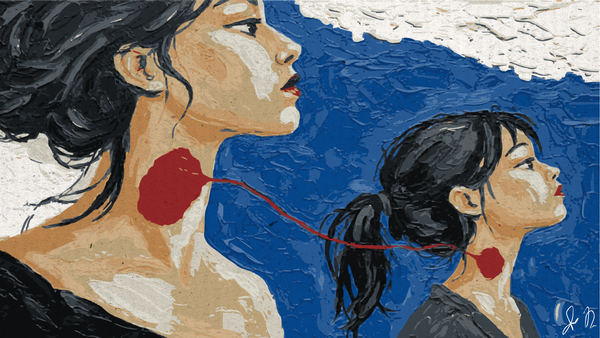
Because her blood is translucent. And it’s not blood at all.
It’s bleach.
“Were you crying?” I whisper. “Your pillow, Ana. Were you crying?”
She nods; she’s weak.
The bleach keeps dripping onto the floor. Ana doesn’t do anything about her inhuman blood leaving her body. Will she regenerate it like a reptile regenerates its tail? I don’t know much about the abilities of those. They show them on TV, but you don’t think you’ll ever come across one of this species, let alone let one settle in your house. Ana. What’s her real name? Does she have one? I have to run, but I don’t, as if I’m waiting for her to regain consciousness and grab the knife and stab my face and sprinkle her blood into my eyes and dissect my skull and switch our brains. I can go on and on. I’ve seen one thousand horror movies in my life; every day I watch the news.
She bleeds. She bleaches. Is she capable of dying?
I want to cry. It’s stupid.
“You should’ve told me you weren’t human. I wouldn’t have made you go.”
“I am a human,” Ana says, and drops onto the floor.
Her face is blue, yet she keeps breathing. I turn to the window. It’s been hours. It’s dark outside. I see my reflection. Eyes, hair, skin.
I am human, not her. I have always been one. Two years ago they drew my blood to see if I was low on iron and vitamin B. I observed my own red blood rising from the hole they’d made in my vein. The blood was only a little thin, just a little too thin.
“It was a dream,” Ana whispers with a weak smile.
I poke my arm with the butcher knife.
There’s no blood.
There’s bleach.

Nora Ray’s fiction and poetry has appeared in Flash Fiction Magazine, MoonPark Review, Maudlin House, Twin Bird Review, Ergot, etc. She’s a poetry and fiction reader at Cosmic Daffodil. She speaks English, Russian, and Spanish. You can find her on Twitter: @noraraywrites
Editor's Note:
Thank you for reading "Bleach" by Nora Ray. You know, the oldest horror stories tend to ask what monsters "look" like. I think the best modern ones ask a more unsettling question, which is... what if we’ve already learned to recognize them incorrectly?
This story begins with something almost laughably ordinary—a roommate whose obsession with cleanliness becomes increasingly difficult to ignore. The repeated smell of bleach transforms from a household nuisance into a psychological irritant, until the narrator’s certainty that something is wrong curdles into suspicion, trespass, and ultimately violence. What makes the story remarkable is that it never lets the supernatural eclipse the human. Every revelation forces us to reconsider not only who Ana is, but who the narrator has quietly become in the process of needing an explanation.
The final moments perform a rare kind of reversal. Rather than assuring us that monsters exist, they suggest that our hunger to separate ourselves from the unfamiliar may be the greater horror. By the time the last drop of bleach falls, certainty itself has become suspect. In that way, it's a haunting meditation on prejudice and identity. On the frightening possibility that the boundaries we trust most are the ones we’ve imagined ourselves.—Jon Negroni
Support Cetera
Paid members get exclusive perks like bonus stories, the ability to comment, and more. Plus you'd be helping us keep the bills paid. You can check out the subscription tiers below, or you can leave a one-time tip if that works better for you.